A New Internet Library: Add Your Website/Blog or Suggest A Website/Blog to our Free Web Directory http://anil.myfunda.net.

Its very simple, free and SEO Friendly.
Submit Now....

Saturday, June 6, 2020

Gridcoin - The Good

In this post we will take an in depth look at the cryptocurrency Gridcoin, we show how we found two critical design vulnerabilities and how we fixed them.

In the last past years we saw many scientific publications about cryptocurrencies. Some focused on theoretical parts [Source] and some on practical attacks against specific well-known cryptocurrencies, like Bitcoin [Source]. But in general there is a lack of practical research against alternative coins. Or did you know that there are currently over 830 currencies listed online? So we asked ourselves how secure are these currencies, and if they are not just re-branded forks of the Bitcoin source code?

Background

Gridcoin is an Altcoin, which is in active development since 2013. It claims to provide a high sustainability, as it has very low energy requirements in comparison to Bitcoin. It rewards users for contributing computation power to scientific projects, published on the BOINC project platform. Although Gridcoin is not as widespread as Bitcoin, its draft is very appealing as it attempts to eliminate Bitcoin's core problems. It possesses a market capitalization of $13,719,142 (2017/08/10).

Berkeley Open Infrastructure for Network Computing

To solve general scientific meaningful problems, Gridcoin draws on the well-known Berkeley Open Infrastructure for Network Computing (BOINC). It is a software platform for volunteer computing, initially released in 2002 and developed by the University of California, Berkeley. It is an open source software licensed under the GNU Lesser General Public License. The platform enables professionals in need for computation power to distribute their tasks to volunteers. Nowadays it is widely used by researchers with limited resources to solve scientific problems, for example, healing cancer, investigate global warming, finding extraterrestrial intelligence in radio signals and finding larger prime numbers.
When launching a BOINC project, its maintainer is required to set up his own BOINC server. Project volunteers may then create accounts (by submitting a username, a password and an email address) and work on specific project tasks, called workunits. The volunteers can process the project tasks and transfer their solutions with a BOINC client.

BOINC architecture

BOINC uses a client-server architecture to achieve its rich feature set. The server component handles the client requests for workunits and the problem solutions uploaded by the clients. The solutions are validated and assimilated by the server component. All workunits are created by the server component and each workunit represents a chunk of a scientific problem which is encapsulated into an application. This application consists of one or multiple in-/output files, containing binary or ASCII encoded parameters.

BOINC terminology

  • iCPID
    • The BOINC project server creates the internal Cross Project Identifier (iCPID) as a 16 byte long random value during account creation. This value is stored by the client and server. From this time on, the iCPID is included in every request and response between client and server
  • eCPID
    • The external Cross Project Identifier (eCPID) serves the purpose of identifying a volunteer across different BOINC projects without revealing the corresponding email address. It is computed by applying the cryptographic hash function MD5 to (iCPID,email) and thus has a length of 16 byte [Source].
eCPID = MD5(iCPID||email)
  • Credits
    • BOINC credits are generated whenever a host submits a solution to an assigned task. They are measured in Cobblestone, whereas one Cobblestone is equivalent to 1/200 of CPU time on a reference machine with 1,000 mega floating point operation per seconds [Source]
  • Total Credit
    • Total number of Cubblestones a user invested with his machines for scientific computations
  • Recent Average Credit (RAC)
    • RAC is defined as the average number of Cobblestones per day generated recently [Source]. If an entire week passes, the value is divided by two. Thus old credits are weakly weighted. It is recalculated whenever a host generates credit [Source].

Gridcoin

As a fork of Litecoin, Gridcoin-Research is a blockchain based cryptocurrency and shares many concepts with Bitcoin. While Bitcoin's transaction data structure and concept is used in an unmodified version, Gridcoin-Research utilizes a slightly modified block structure. A Gridcoin-Research block encapsulates a header and body. The header contains needed meta information and the body encloses transactions. Due to the hashPrevBlockHeader field, which contains the hash of the previous block-header, the blocks are linked and form the distributed ledger, the blockchain. Blocks in the blockchain are created by so called minters. Each block stores a list of recent transactions in its body and further metadata in its header. To ensure that all transactions are confirmed in a decisive order, each block-header field contains a reference to the previous one. To regulate the rate in which new blocks are appended to the blockchain and to reward BOINC contribution, Gridcoin-Research implements another concept called Proof-of-Research. Proof-of-Research is a combination of a new overhauled Proof-of-BOINC concept, which was originally designed for Gridcoin-Classic and the improved Proof-of-Stake concept, inspired by alternative cryptocurrencies.

Fig. 1: Gridcoin block structure

Gridcoin terminology

In order to understand the attacks we need to introduce some Gridcoin specific terms.
  • eCPID
    • Identifier value from BOINC used in Gridcoin to identify the researcher.
  • CPIDv2
    • contains a checksum to prove that the minter is the owner of the used eCPID. We fully describe the content of this field in the last attack section.
  • GRCAddress
    • contains the payment address of the minter.
  • ResearchAge
    • is defined as the time span between the creation time of the last Proof-of-Research generated block with the user's eCPID and the time stamp of the last block in the chain measured in days.
  • RSAWeight
    • estimates the user's Gridcoin gain for the next two weeks, based on the BOINC contribution of the past two weeks.

Proof-of-Stake

Proof-of-Stake is a Proof-of-Work replacement, which was first utilized by the cryptocurrency Peercoin in 2012. This alternative concept was developed to showcase a working Bitcoin related currency with low power consumption. Therefore, the block generation process has been overhauled. To create a new valid block for the Gridcoin blockchain the following inequality have to be satisfied:

SHA256(SHA256(kernel)) < Target * UTXO Value + RSAWeight

The kernel value represents the concatenation of the parameters listed in Table 2. The referenced unspent transaction output (UTXO) must be at least 16 hours old. The so called RSAWeight is an input value to the kernel computation, it's indicates the average BOINC work, done by a Gridcoin minter.
In direct comparison to Bitcoin's Proof-of-Work concept, it is notable that the hash of the previous block-header is not part of the kernel. Consequently, it is theoretically possible to create a block at any previous point in time in the past. To prevent this, Gridcoin-Research creates fixed interval checkpoint blocks. Once a checkpoint block is synchronized with the network, blocks with older time stamps became invalid. Considering the nature of the used kernel fields, a client with only one UTXO is able to perform a hash calculation each time nTime is updated. This occurs every second, as nTime is a UNIX time stamp. To be able to change the txPrev fields and thereby increase his hash rate, he needs to gain more UTXO by purchasing coins. Note that high UTXO and RSAWeight values mitigate the difficulty of the cryptographic puzzle, which increase the chance of finding a valid kernel. RSAWeight was explained above. Once a sufficient kernel has been found, the referenced UTXO is spent in a transaction to the creator of the block and included in the generated block. This consumes the old UTXO and generates a new one with the age of zero.

The Gridcoin-Research concept does not require much electrical power, because the maximum hash rate of an entity is limited by its owned amount of UTXOs with suitable age.

Proof-of-Research

Minters relying solely on the Proof-of-Stake rewards are called Investors. In addition to Proof-of-Stake, Gridcoin gives minters a possibility to increase their income with Proof-of-Research rewards. The Proof-of-Research concept implemented in Gridcoin-Research allows the minters to highly increase their block reward by utilizing their BOINC Credits. In this case the minter is called a Researcher.
To reward BOINC contribution, relevant BOINC data needs to be stored in each minted block. Therefore, the software uses the BOINCHash data structure, which is encapsulated in the first transaction of each block. The structure encloses the fields listed in Table 6. The minting and verification process is shown in Figure 2 and works as follows:
  1. A minter (Researcher) participates in a BOINC project A and performs computational work for it. In return the project server increases the users Total Credit value on the server. The server therefore stores the minter's email address, iCPID, eCPID and RAC.
  2. Statistical websites contact project server and down-load the statistics for all users from the project server (A).
  3. After the user earns credits, his RAC increases. Consequently, this eases the finding of a solution for the Proof-of-Stake cryptographic puzzle, and the user can create (mint) a block and broadcast it to the Gridcoin network.
  4. Another minter (Investor or Researcher) will receive the block and validate it. Therefore, he extracts the values from the BOINCHash data structure inside the block.
  5. The minter uses the eCPID from the BOINCHash to request the RAC and other needed values from a statistical website and compares them to the data extracted from the BOINCHash structure, in the event that they are equal and the block solves the cryptographic puzzle, the block is accepted.

 Fig. 2: Gridcoin architecture and minting process

Reward calculation

The total reward for a solved block is called the Subsidy and is computed as the sum of the Proof-of-Research and the Proof-of-Stake reward.
If a minter operates as an Investor (without BOINC contribution), the eCPID is set to the string Investor and all other fields of the BOINCHash are zeroed. An Investor receives only a relatively small Proof-of-Stake reward.
Because the Proof-of-Research reward is much higher than its Proof-of-Stake counterpart, contributing to BOINC projects is more worth the effort.

Statistic Website

At the beginning of the blog post, the core concept behind BOINC was described. One functionality is the creation of BOINC Credits for users, who perform computational work for the project server. This increases the competition between BOINC users and therefore has a positive effect on the amount of computational work users commit. Different websites 4 collect credit information of BOINC users from known project servers and present them online. The Gridcoin client compares the RAC and total credit values stored in a new minted block with the values stored on cpid.gridcoin.us:5000/get_user.php?cpid=eCPID where eCPID is the actual value of the researcher. If there are differences, the client declines the block. In short, statistical websites are used as control instance for Gridcoin. It is obvious that gridcoin.us administrators are able to modify values of any user. Thus, they are able to manipulate the amount of Gridcoins a minter gets for his computational work. This is crucial for the trust level and undermines the general decentralized structure of a cryptocurrency.

Project Servers

Gridcoin utilizes BOINC projects to outsource meaningful computation tasks from the currency. For many known meaningful problems there exist project servers 5 that validate solutions submitted by users, 6 and decide how many credits the users receive for their solutions. Therefore, the project servers can indirectly control the amount of Gridcoins a minter gets for his minted block via the total credit value. As a result, a Gridcoin user also needs to trust the project administrators. This is very critical since there is no transparency in the credit system of project server. If you want to know why decentralization is not yet an option, see our paper from WOOT'17.

Attacks

In addition to the trust a Gridcoin user needs to put into the project server and statistic website administrators, Gridcoin suffers from serious flaws which allows the revelation of minter identities or even stealing coins. Our attacks do not rely on the Gridcoin trust issues and the attacker does not need to be in possession of specific server administrative rights. We assume the following two simple attackers with limited capability sets. The first one, is the blockchain grabber which can download the Gridcoin blockchain from an Internet resource and runs a program on the downloaded data. The second one, the Gridcoin attacker, acts as a normal Gridcoin user, but uses a modified Gridcoin client version, in order to run our attacks.

Interestingly, the developer of Gridcoin tried to make the source code analysis somewhat harder, by obfuscating the source code of relevant functions.
 Fig. 3: Obfuscated source code in Gridcoin [Source]

Grab Gridcoin user email addresses

In order to protect the email addresses of Gridcoin Researchers, neither BOINC project websites nor statistical websites directly include these privacy critical data. The statistical websites only include eCPID entries, which are used to reward Gridcoin Researchers. However, the email addresses are hidden inside the computation of the BOINCHash (cf. Table 1). A BOINCHash is created every time a Researcher mints a new block and includes a CPIDv2 value. The CPIDv2 value contains an obfuscated email address with iCPID and a hash over the previous blockchain block.
By collecting the blockchain data and reversing the obfuscation function (cf. Figure 4 and Figure 7), the attacker gets all email addresses and iCPIDs ever used by Gridcoin Researchers. See the reversed obfuscation function in Figure 4 and Figure 5.

Evaluation

We implemented a deobfuscation function (cf. Figure 7) and executed it on the blockchain. This way, we were able to retrieve all (2709) BOINC email addresses and iCPIDs used by Gridcoin Researchers. This is a serious privacy issue and we address it with our fix (cf. The Fix).

Steal Gridcoin users BOINC reward

The previous attack through deobfuscation allows us to retrieve iCPID values and email addresses. Thus, we have all values needed to create a new legitimate eCPID. This is required because the CPIDv2 contains the last block hash and requires a re-computation for every new block it should be used in. We use this fact in the following attack and show how to steal the computational work from another legitimate Gridcoin Researcher by mining a new Gridcoin block with forged BOINC information. Throughout this last part of the post, we assume the Gridcoin Minter attacker model where the attacker has a valid Gridcoin account and can create new blocks. However, the attacker does not perform any BOINC work.

 Tab. 1: BOINCHash structure as stored and used in the Gridcoin blockchain.
As stated at the beginning of the blog post, the pre-image of the eCPID is stored obfuscated in every Gridcoin block, which contains a Proof-of-Research reward. We gathered one pre-image from the minted blocks of our victim and deobfuscated it. Thus, we know the values of the iCPID, and the email address of our victim. Subsequently, use the hash of the last block created by the network and use these three values to create a valid CPIDv2. Afterwards we constructed a new block. In the block we also store the current BOINC values of our victim, which we can gather from the statistics websites. The final block is afterwards sent into the Gridcoin network. In case all values are computed correctly by the attacker, the network will accept the block, and resulting in a higher reward for the attacker, consisting of Proof-of-Stake and Proof-of-Research reward.


 Fig. 4: Obfuscation function  Fig. 5: Deobfuscation function

Evaluation

In order to verify our attacks practically, we created two virtual machines (R and A), both running Ubuntu 14.04.3 LTS. The virtual machine R contained a legitimate BOINC and Gridcoin instance. It represented the setup of a normal Gridcoin Researcher. The second machine A contained a modified Gridcoin-Research client 3.5.6.8 version, which tried to steal the Proof-of-Research reward of virtual machine R. Thus, we did not steal reward of other legitimate users. The victim BOINC client was attached to the SETI@home project 11 with the eCPID 9f502770e61fc03d23d8e51adf7c6291.
The victim and the attacker were in possession of Gridcoins, enabling them to stake currency and to create new blocks.
 Fig. 6: CPIDv2 calculation deobfuscated

Initially both Gridcoin-Research clients retrieved the blockchain from other Gridcoin nodes in the Gridcoin network.
The Gridcoin attack client made it possible to specify the victim email address, iCPID and target project. All these values can be retrieved from the downloaded blockchain and our previous attack via the reverseCPIDv2 function as shown in Figure 7. The attack client read the iCPID and email address of the victim from a modified configuration file. All other values, for example, RAC or ResearchAge, were pulled from http://cpid.gridcoin.us:5000/get_user.php?cpid=. As soon as all values were received, the client attempted to create a new valid block.


 Fig. 7: Reverse the CPIDv2 calculation to get iCPID and email address

Once a block had been created and confirmed, the attacker received the increased coin reward with zero BOINC contribution done. The attack could only be detected by its victims because an outside user did not know the legitimate Gridcoin addresses a Researcher uses.
All blocks created with our victim's eCPID are shown in Table 2. Illegitimate blocks are highlighted. We were able to mint multiple illegitimate blocks, and thus stealing Research Age from our victim machine R. All nine blocks created and send by our attacker to the Gridcoin network passed the Gridcoin block verification, were confirmed multiple times, and are part of the current Gridcoin blockchain. During our testing timespan of approximately three weeks, the attacker machine was wrongfully rewarded with 72.4 Proof-of-Research generated Gridcoins, without any BOINC work. The results show that the attack is not only theoretically possible, but also very practical, feasible and effective. The attack results can be reproduced with our Gridcoin-Research-Attack client.

 Tab. 2:Blocks minted with the victim's eCPID

The Fix

In order to fix the security issue, we found one solution which does not require any changes to the BOINC source code nor the infrastructure. It is sufficient to change some parts of the already existing Gridcoin Beacon system. Thus, our solution is backwards compatible.
The current Gridcoin client utilizes so called Beacons to register new eCPIDs and stores them as a transaction of 0.0001 Gridcoins in a Superblock which is created every 24 hours. A Beacon encloses the user's personal eCPIDs, a corresponding unused (but irreversible) CPIDv2, and the wallet's main Gridcoin payment address. Once the Superblock is created, the eCPIDs is bound to one Gridcoin payment address. During the block verification process this bond is unfortunately not checked. Furthermore, the existing Beacon system does not use any strong asymmetric cryptography to ensure authenticity and integrity of the broadcasted data. We propose to extend the Beacon system with public key cryptography. In detail, we suggest that a user binds his fresh public key PK_1 to a newly generated eCPID, and then storing them together in a Superblock. An initial Beacon would therefore contain a hashed (e.g. SHA-256) eCPID, the public key, a Nonce, and a cryptographic signature created with the corresponding secret key SK_1 of the public key. This allows only the owner of the secret key to create valid signatures over blocks created with his eCPID. Thus, an adversary first needs to forge a cryptographic signature before he can claim Proof-of-Research work of another Gridcoin user. Thus, he is not capable of stealing the reward of the user.

Beacon to create a eCPID, public/secret key pair bond

For verification purposes nodes fetch the corresponding latest public key from one of the Superblocks. Furthermore, this Beacon structure allows a user to replace his previous public key associated with his eCPID. This is realized by submitting a new Beacon with a new public key PK_2, signed with his old secret key.

Beacon to update a eCPID, public/secret key pair bond

All Beacons in the chain are verifiable and the latest public key is always authentic. The Nonce provide freshness for the signature input, and therefore prevent replay attacks against the Beacon system.
Note that the eCPID needs to be completely unknown to the network, when sending the initial Beacon, for this concept to work as intended. The hash function ensures, that the Beacon does not reveal the fresh eCPID. As a result, an attacker is unable to mint with a eCPID even if he was able to intercept an initial Beacon and replaced the public key and signature with his own parameters, beforehand. This solution does not require any changes in the BOINC source code or the project servers.

Sign a block

In order to claim the Proof-of-Research reward for a newly created block, the Gridcoin minter computes a signature over the hash of the blockheader. Afterwards, he stores the resulting value at the end of the corresponding block in a new field. The private key used for the signature generation must correspond to the advertised public key by the user. It is important to note that the signature value is not part of the Merkle tree, and thus does not change the blockheader. In the end, the signature can then be verified by every other Gridcoin user via the advertised public key corresponding to the eCPID of the Gridcoin minter.

Responsible Disclosure

The attacks and the countermeasures were responsibly disclosed to the Gridcoin developer on the 14th of September, 2016. The developer used our proposed countermeasures and started to implement a new version. Since version 3.5.8.8, which is mandatory for all Gridcoin users, there exists an implementation, which contains countermeasures to our reward stealing attack.
See our next blog post, why Gridcoin is still insecure and should not be used anymore.

Further Reading
A more detailed description of Gridcoin and the attacks will be presented at WOOT'17, the paper is available here.

Authors

Tobias Niemann
Juraj Somorovsky
Related links

Friday, June 5, 2020

Top 10 Best Google Gravity Tricks 2018

Best Google Gravity Tricks 2018

Top 10 Best Google Gravity Tricks 2018

Google is the search engine where the people look up for the things. Yet apart from being only a search engine this website is highly functional and has a lot of functions dubbed inside it. And even the webmasters don't know about all the features as they are so vast that you need to explore lots of things to get to know about them all.  There are a number of gravity opposing tricks in the Google search page that you would like to enjoy. Well many of you guys must be new to this word as only 15% of Google users know this thing and for rest, I'm here to guide you up in this. Here in this article, we have written about the best google gravity tricks that you could ever find in this year. If you are interested to know about it then please read the main section of this post as it is given below. This was all the introduction part of this post and now after this line, we are going to skip to the main section. We recommend you to read till the end to get the fullest information from this page!

Top 10 Best Google Gravity Tricks 2018

Below I have mentioned some of the best tricks that I tried as I was getting bored and thought about exploring something new and then I searched Google Tricks on google and then I get to know that even these things are also possible on the Google. You can use so many different things to kill your boredom on Google. There I decided to note down these tricks and share the article with you so that you can also avail these. So follow the below guide to proceed.

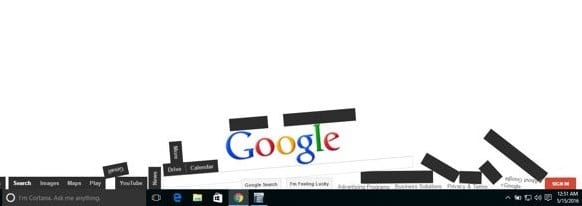
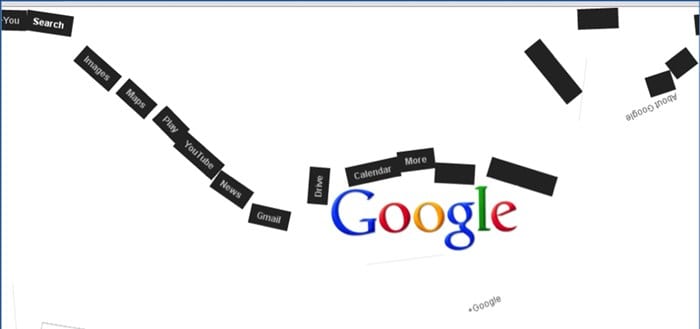
#1 Google zero gravity level fall

Best Google Gravity Tricks 2018
This is the first trick that amazed me as when I get to know this thing can happen when I was really surprised as it was quite funny. It is a standout amongst the most astonishing google gravity trap. In this trap, the substance will appear like tumbling to a level surface. Every one of the substances like pictures, writings, and so on of your page will be upset. They will look somewhat bouncy and turned around that looks exceptionally energizing and stunning.

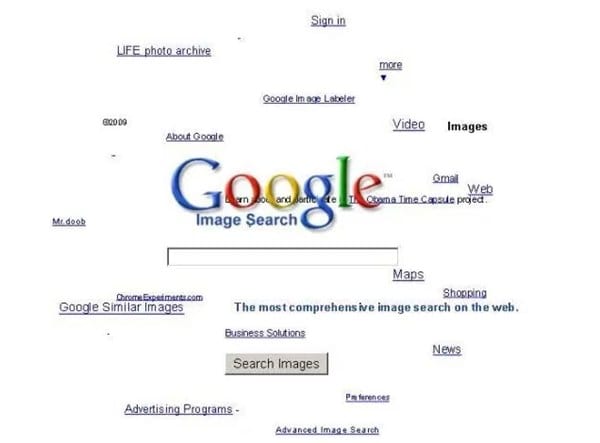
#2 Google Sphere

Best Google Gravity Tricks That You Need To Try
This is second best google gravity trap. In this trap, the substance rotates in a round way. Be that as it may, you will think that its little hard to deal with it since you need to chip away at turning writings.

#3 Google Loco

Best Google Gravity Tricks That You Need To Try
This google gravity trap is much like the google zero gravity. You will see the substance as falling in a seismic tremor,

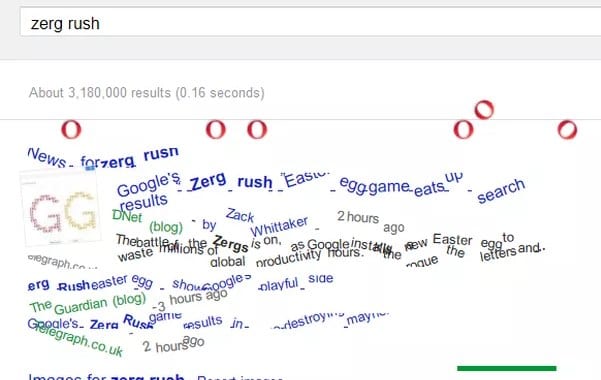
#4 Zerg Rush

Best Google Gravity Tricks That You Need To Try
This is one of my most loved google gravity trap. In this deceive you will see somewhere in the range of zeros spreading in your page. to utilize this trap Open Google.com and hunt Zerg Rush through utilizing the search bar.

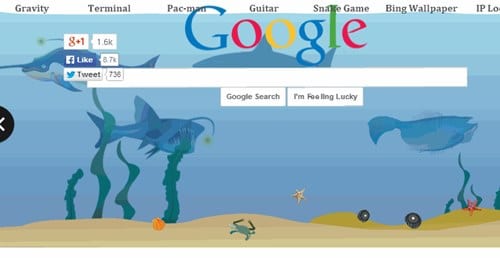
#5 Google submerged

Best Google Gravity Tricks 2018
This is of the most attractive google gravity trap. In this deceive you will see a domain of submerged. You will see the pursuit bar coasting in the water.

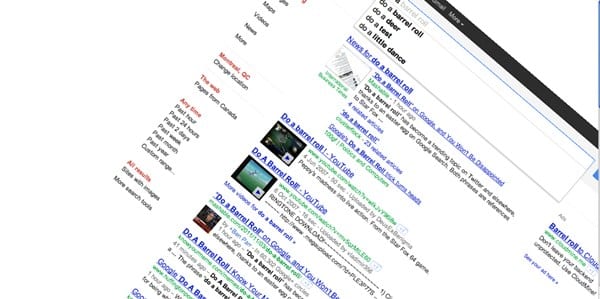
#6 Do a barrel roll

Best Google Gravity Tricks That You Need To Try
This is likewise an astounding google gravity trap. In this deceive, you will get an impact to your page with which, your page will turn in a solitary minute.

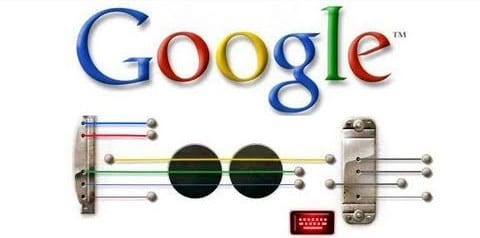
#7 Google Guitar

Best Google Gravity Tricks That You Need To Try
This is additionally a stunning google gravity trap. In this deceive, you can play guitar on the web index. You can play your coveted tunes with it. Google will give you notes to your tunes.

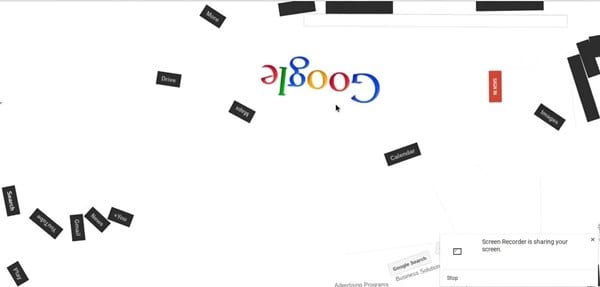
#8 Google zero gravity reversal

Best Google Gravity Tricks 2018
This is one of the coolest Google gravity trap. In this deceive, you will get a perfect representation of your site page. You will feel like you are on the opposite side of the screen.

#9 Google space

Best Google Gravity Tricks That You Need To Try
In this google gravity deceive you encounter a dream of the room. It implies that the substance of your page will appear like gliding noticeable all around with no gravitational power.

#10 Pacman

Best Google Gravity Tricks That You Need To Try
Best Google Gravity Tricks 2018 That You Need To Try
This is the standout amongst the most energizing google gravity trap. With this deceive, you can play Pacman game in this.
Finally, after reading this article, you have got to know about. We have tried to provide you this content in the simple and easy to read wordings and hope that you would have easily got about everything written up here. We believe that you might like this article and if it is what you think then please try to share it with others too. Your indulgence in our post is really valuable to us, so do not miss to write about your opinions and suggestions regarding this article through using the comments section below. At last but never the least thanks for reading this article!

More information


  1. Hacking Gif
  2. Hacking Books
  3. Pentest Framework
  4. Hacking Names
  5. Hackintosh
  6. Pentest Bootcamp
  7. Hacking Bluetooth
  8. Pentest Uk
  9. Hacking With Linux
  10. Hacker Ethic
  11. Hacking Websites

CVE-2020-2655 JSSE Client Authentication Bypass

During our joint research on DTLS state machines, we discovered a really interesting vulnerability (CVE-2020-2655) in the recent versions of Sun JSSE (Java 11, 13). Interestingly, the vulnerability does not only affect DTLS implementations but does also affects the TLS implementation of JSSE in a similar way. The vulnerability allows an attacker to completely bypass client authentication and to authenticate as any user for which it knows the certificate WITHOUT needing to know the private key. If you just want the PoC's, feel free to skip the intro.


DTLS

I guess most readers are very familiar with the traditional TLS handshake which is used in HTTPS on the web.


DTLS is the crayon eating brother of TLS. It was designed to be very similar to TLS, but to provide the necessary changes to run TLS over UDP. DTLS currently exists in 2 versions (DTLS 1.0 and DTLS 1.2), where DTLS 1.0 roughly equals TLS 1.1 and DTLS 1.2 roughly equals TLS 1.2. DTLS 1.3 is currently in the process of being standardized. But what exactly are the differences? If a protocol uses UDP instead of TCP, it can never be sure that all messages it sent were actually received by the other party or that they arrived in the correct order. If we would just run vanilla TLS over UDP, an out of order or dropped message would break the connection (not only during the handshake). DTLS, therefore, includes additional sequence numbers that allow for the detection of out of order handshake messages or dropped packets. The sequence number is transmitted within the record header and is increased by one for each record transmitted. This is different from TLS, where the record sequence number was implicit and not transmitted with each record. The record sequence numbers are especially relevant once records are transmitted encrypted, as they are included in the additional authenticated data or HMAC computation. This allows a receiving party to verify AEAD tags and HMACs even if a packet was dropped on the transport and the counters are "out of sync".
Besides the record sequence numbers, DTLS has additional header fields in each handshake message to ensure that all the handshake messages have been received. The first handshake message a party sends has the message_seq=0 while the next handshake message a party transmits gets the message_seq=1 and so on. This allows a party to check if it has received all previous handshake messages. If, for example, a server received message_seq=2 and message_seq=4 but did not receive message_seq=3, it knows that it does not have all the required messages and is not allowed to proceed with the handshake. After a reasonable amount of time, it should instead periodically retransmit its previous flight of handshake message, to indicate to the opposing party they are still waiting for further handshake messages. This process gets even more complicated by additional fragmentation fields DTLS includes. The MTU (Maximum Transmission Unit) plays a crucial role in UDP as when you send a UDP packet which is bigger than the MTU the IP layer might have to fragment the packet into multiple packets, which will result in failed transmissions if parts of the fragment get lost in the transport. It is therefore desired to have smaller packets in a UDP based protocol. Since TLS records can get quite big (especially the certificate message as it may contain a whole certificate chain), the messages have to support fragmentation. One would assume that the record layer would be ideal for this scenario, as one could detect missing fragments by their record sequence number. The problem is that the protocol wants to support completely optional records, which do not need to be retransmitted if they are lost. This may, for example, be warning alerts or application data records. Also if one party decides to retransmit a message, it is always retransmitted with an increased record sequence number. For example, the first ClientKeyExchange message might have record sequence 2, the message gets dropped, the client decides that it is time to try again and might send it with record sequence 5. This was done as retransmissions are only part of DTLS within the handshake. After the handshake, it is up to the application to deal with dropped or reordered packets. It is therefore not possible to see just from the record sequence number if handshake fragments have been lost. DTLS, therefore, adds additional handshake message fragment information in each handshake message record which contains information about where the following bytes are supposed to be within a handshake message.


If a party has to replay messages, it might also refragment the messages into bits of different (usually smaller) sizes, as dropped packets might indicate that the packets were too big for the MTU). It might, therefore, happen that you already have received parts of the message, get a retransmission which contains some of the parts you already have, while others are completely new to you and you still do not have the complete message. The only option you then have is to retransmit your whole previous flight to indicate that you still have missing fragments. One notable special case in this retransmission fragmentation madness is the ChangecipherSpec message. In TLS, the ChangecipherSpec message is not a handshake message, but a message of the ChangeCipherSpec protocol. It, therefore, does not have a message_sequence. Only the record it is transmitted in has a record sequence number. This is important for applications that have to determine where to insert a ChangeCipherSpec message in the transcript.

As you might see, this whole record sequence, message sequence, 2nd layer of fragmentation, retransmission stuff (I didn't even mention epoch numbers) which is within DTLS, complicates the whole protocol a lot. Imagine being a developer having to implement this correctly and secure...  This also might be a reason why the scientific research community often does not treat DTLS with the same scrutiny as it does with TLS. It gets really annoying really fast...

Client Authentication

In most deployments of TLS only the server authenticates itself. It usually does this by sending an X.509 certificate to the client and then proving that it is in fact in possession of the private key for the certificate. In the case of RSA, this is done implicitly the ability to compute the shared secret (Premaster secret), in case of (EC)DHE this is done by signing the ephemeral public key of the server. The X.509 certificate is transmitted in plaintext and is not confidential. The client usually does not authenticate itself within the TLS handshake, but rather authenticates in the application layer (for example by transmitting a username and password in HTTP). However, TLS also offers the possibility for client authentication during the TLS handshake. In this case, the server sends a CertificateRequest message during its first flight. The client is then supposed to present its X.509 Certificate, followed by its ClientKeyExchange message (containing either the encrypted premaster secret or its ephemeral public key). After that, the client also has to prove to the server that it is in possession of the private key of the transmitted certificate, as the certificate is not confidential and could be copied by a malicious actor. The client does this by sending a CertificateVerify message, which contains a signature over the handshake transcript up to this point, signed with the private key which belongs to the certificate of the client. The handshake then proceeds as usual with a ChangeCipherSpec message (which tells the other party that upcoming messages will be encrypted under the negotiated keys), followed by a Finished message, which assures that the handshake has not been tampered with. The server also sends a CCS and Finished message, and after that handshake is completed and both parties can exchange application data. The same mechanism is also present in DTLS.

But what should a Client do if it does not possess a certificate? According to the RFC, the client is then supposed to send an empty certificate and skip the CertificateVerify message (as it has no key to sign anything with). It is then up to the TLS server to decide what to do with the client. Some TLS servers provide different options in regards to client authentication and differentiate between REQUIRED and WANTED (and NONE). If the server is set to REQUIRED, it will not finish the TLS handshake without client authentication. In the case of WANTED, the handshake is completed and the authentication status is then passed to the application. The application then has to decide how to proceed with this. This can be useful to present an error to a client asking him to present a certificate or insert a smart card into a reader (or the like). In the presented bugs we set the mode to REQUIRED.

State machines

As you might have noticed it is not trivial to decide when a client or server is allowed to receive or send each message. Some messages are optional, some are required, some messages are retransmitted, others are not. How an implementation reacts to which message when is encompassed by its state machine. Some implementations explicitly implement this state machine, while others only do this implicitly by raising errors internally if things happen which should not happen (like setting a master_secret when a master_secret was already set for the epoch). In our research, we looked exactly at the state machines of DTLS implementations using a grey box approach. The details to our approach will be in our upcoming paper (which will probably have another blog post), but what we basically did is carefully craft message flows and observed the behavior of the implementation to construct a mealy machine which models the behavior of the implementation to in- and out of order messages. We then analyzed these mealy machines for unexpected/unwanted/missing edges. The whole process is very similar to the work of Joeri de Ruiter and Erik Poll.


JSSE Bugs

The bugs we are presenting today were present in Java 11 and Java 13 (Oracle and OpenJDK). Older versions were as far as we know not affected. Cryptography in Java is implemented with so-called SecurityProvider. Per default SUN JCE is used to implement cryptography, however, every developer is free to write or add their own security provider and to use them for their cryptographic operations. One common alternative to SUN JCE is BouncyCastle. The whole concept is very similar to OpenSSL's engine concept (if you are familiar with that). Within the JCE exists JSSE - the Java Secure Socket Extension, which is the SSL/TLS part of JCE. The presented attacks were evaluated using SUN JSSE, so the default TLS implementation in Java. JSSE implements TLS and DTLS (added in Java 9). However, DTLS is not trivial to use, as the interface is quite complex and there are not a lot of good examples on how to use it. In the case of DTLS, only the heart of the protocol is implemented, how the data is moved from A to B is left to the developer. We developed a test harness around the SSLEngine.java to be able to speak DTLS with Java. The way JSSE implemented a state machine is quite interesting, as it was completely different from all other analyzed implementations. JSSE uses a producer/consumer architecture to decided on which messages to process. The code is quite complex but worth a look if you are interested in state machines.

So what is the bug we found? The first bug we discovered is that a JSSE DTLS/TLS Server accepts the following message sequence, with client authentication set to required:


JSSE is totally fine with the messages and finishes the handshake although the client does NOT provide a certificate at all (nor a CertificateVerify message). It is even willing to exchange application data with the client. But are we really authenticated with this message flow? Who are we? We did not provide a certificate! The answer is: it depends. Some applications trust that needClientAuth option of the TLS socket works and that the user is *some* authenticated user, which user exactly does not matter or is decided upon other authentication methods. If an application does this - then yes, you are authenticated. We tested this bug with Apache Tomcat and were able to bypass ClientAuthentication if it was activated and configured to use JSSE. However, if the application decides to check the identity of the user after the TLS socket was opened, an exception is thrown:

The reason for this is the following code snippet from within JSSE:


As we did not send a client certificate the value of peerCerts is null, therefore an exception is thrown. Although this bug is already pretty bad, we found an even worse (and weirder) message sequence which completely authenticates a user to a DTLS server (not TLS server though). Consider the following message sequence:

If we send this message sequence the server magically finishes the handshake with us and we are authenticated.

First off: WTF
Second off: WTF!!!111

This message sequence does not make any sense from a TLS/DTLS perspective. It starts off as a "no-authentication" handshake but then weird things happen. Instead of the Finished message, we send a Certificate message, followed by a Finished message, followed by a second(!) CCS message, followed by another Finished message. Somehow this sequence confuses JSSE such that we are authenticated although we didn't even provide proof that we own the private key for the Certificate we transmitted (as we did not send a CertificateVerify message).
So what is happening here? This bug is basically a combination of multiple bugs within JSSE. By starting the flight with a ClientKeyExchange message instead of a Certificate message, we make JSSE believe that the next messages we are supposed to send are ChangeCipherSpec and Finished (basically the first exploit). Since we did not send a Certificate message we are not required to send a CertificateVerify message. After the ClientKeyExchange message, JSSE is looking for a ChangeCipherSpec message followed by an "encrypted handshake message". JSSE assumes that the first encrypted message it receives will be the Finished message. It, therefore, waits for this condition. By sending ChangeCipherSpec and Certificate we are fulfilling this condition. The Certificate message really is an "encrypted handshake message" :). This triggers JSSE to proceed with the processing of received messages, ChangeCipherSpec message is consumed, and then the Certifi... Nope, JSSE notices that this is not a Finished message, so what JSSE does is buffer this message and revert to the previous state as this step has apparently not worked correctly. It then sees the Finished message - this is ok to receive now as we were *somehow* expecting a Finished message, but JSSE thinks that this Finished is out of place, as it reverted the state already to the previous one. So this message gets also buffered. JSSE is still waiting for a ChangeCipherSpec, "encrypted handshake message" - this is what the second ChangeCipherSpec & Finished is for. These messages trigger JSSE to proceed in the processing. It is actually not important that the last message is a Finished message, any handshake message will do the job. Since JSSE thinks that it got all required messages again it continues to process the received messages, but the Certificate and Finished message we sent previously are still in the buffer. The Certificate message is processed (e.g., the client certificate is written to the SSLContext.java). Then the next message in the buffer is processed, which is a Finished message. JSSE processes the Finished message (as it already had checked that it is fine to receive), it checks that the verify data is correct, and then... it stops processing any further messages. The Finished message basically contains a shortcut. Once it is processed we can stop interpreting other messages in the buffer (like the remaining ChangeCipherSpec & "encrypted handshake message"). JSSE thinks that the handshake has finished and sends ChangeCipherSpec Finished itself and with that the handshake is completed and the connection can be used as normal. If the application using JSSE now decides to check the Certificate in the SSLContext, it will see the certificate we presented (with no possibility to check that we did not present a CertificateVerify). The session is completely valid from JSSE's perspective.

Wow.

The bug was quite complex to analyze and is totally unintuitive. If you are still confused - don't worry. You are in good company, I spent almost a whole day analyzing the details... and I am still confused. The main problem why this bug is present is that JSSE did not validate the received message_sequence numbers of incoming handshake message. It basically called receive, sorted the received messages by their message_sequence, and processed the message in the "intended" order, without checking that this is the order they are supposed to be sent in.
For example, for JSSE the following message sequence (Certificate and CertificateVerify are exchanged) is totally fine:

Not sending a Certificate message was fine for JSSE as the REQUIRED setting was not correctly evaluated during the handshake. The consumer/producer architecture of JSSE then allowed us to cleverly bypass all the sanity checks.
But fortunately (for the community) this bypass does not work for TLS. Only the less-used DTLS is vulnerable. And this also makes kind of sense. DTLS has to be much more relaxed in dealing with out of order messages then TLS as UDP packets can get swapped or lost on transport and we still want to buffer messages even if they are out of order. But unfortunately for the community, there is also a bypass for JSSE TLS - and it is really really trivial:

Yep. You can just not send a CertificateVerify (and therefore no signature at all). If there is no signature there is nothing to be validated. From JSSE's perspective, you are completely authenticated. Nothing fancy, no complex message exchanges. Ouch.

PoC

A vulnerable java server can be found _*here*_. The repository includes a pre-built JSSE server and a Dockerfile to run the server in a vulnerable Java version. (If you want, you can also build the server yourself).
You can build the docker images with the following commands:

docker build . -t poc

You can start the server with docker:

docker run -p 4433:4433 poc tls

The server is configured to enforce client authentication and to only accept the client certificate with the SHA-256 Fingerprint: B3EAFA469E167DDC7358CA9B54006932E4A5A654699707F68040F529637ADBC2.

You can change the fingerprint the server accepts to your own certificates like this:

docker run -p 4433:4433 poc tls f7581c9694dea5cd43d010e1925740c72a422ff0ce92d2433a6b4f667945a746

To exploit the described vulnerabilities, you have to send (D)TLS messages in an unconventional order or have to not send specific messages but still compute correct cryptographic operations. To do this, you could either modify a TLS library of your choice to do the job - or instead use our TLS library TLS-Attacker. TLS-Attacker was built to send arbitrary TLS messages with arbitrary content in an arbitrary order - exactly what we need for this kind of attack. We have already written a few times about TLS-Attacker. You can find a general tutorial __here__, but here is the TLDR (for Ubuntu) to get you going.

Now TLS-Attacker should be built successfully and you should have some built .jar files within the apps/ folder.
We can now create a custom workflow as an XML file where we specify the messages we want to transmit:

This workflow trace basically tells TLS-Attacker to send a default ClientHello, wait for a ServerHelloDone message, then send a ClientKeyExchange message for whichever cipher suite the server chose and then follow it up with a ChangeCipherSpec & Finished message. After that TLS-Attacker will just wait for whatever the server sent. The last action prints the (eventually) transmitted application data into the console. You can execute this WorkflowTrace with the TLS-Client.jar:

java -jar TLS-Client.jar -connect localhost:4433 -workflow_input exploit1.xml

With a vulnerable server the result should look something like this:

and from TLS-Attackers perspective:

As mentioned earlier, if the server is trying to access the certificate, it throws an SSLPeerUnverifiedException. However, if the server does not - it is completely fine exchanging application data.
We can now also run the second exploit against the TLS server (not the one against DTLS). For this case I just simply also send the certificate of a valid client to the server (without knowing the private key). The modified WorkflowTrace looks like this:

Your output should now look like this:

As you can see, when accessing the certificate, no exception is thrown and everything works as if we would have the private key. Yep, it is that simple.
To test the DTLS specific vulnerability we need a vulnerable DTLS-Server:

docker run -p 4434:4433/udp poc:latest dtls

A WorkflowTrace which exploits the DTLS specific vulnerability would look like this:

To execute the handshake we now need to tell TLS-Attacker additionally to use UDP instead of TCP and DTLS instead of TLS:

java -jar TLS-Client.jar -connect localhost:4434 -workflow_input exploit2.xml -transport_handler_type UDP -version DTLS12

Resulting in the following handshake:

As you can see, we can exchange ApplicationData as an authenticated user. The server actually sends the ChangeCipherSpec,Finished messages twice - to avoid retransmissions from the client in case his ChangeCipherSpec,Finished is lost in transit (this is done on purpose).


Conclusion

These bugs are quite fatal for client authentication. The vulnerability got CVSS:4.8 as it is "hard to exploit" apparently. It's hard to estimate the impact of the vulnerability as client authentication is often done in internal networks, on unusual ports or in smart-card setups. If you want to know more about how we found these vulnerabilities you sadly have to wait for our research paper. Until then ~:)

Credits

Paul Fiterau Brostean (@PaulTheGreatest) (Uppsala University)
Robert Merget (@ic0nz1) (Ruhr University Bochum)
Juraj Somorovsky (@jurajsomorovsky) (Ruhr University Bochum)
Kostis Sagonas (Uppsala University)
Bengt Jonsson (Uppsala University)
Joeri de Ruiter (@cypherpunknl)  (SIDN Labs)


 Responsible Disclosure

We reported our vulnerabilities to Oracle in September 2019. The patch for these issues was released on 14.01.2020.
Related news
  1. Pentest Firewall
  2. Pentest Ftp
  3. Hacking Script
  4. Pentest Keys
  5. Hacking With Raspberry Pi
  6. Hacker Google
  7. Pentest Blog
  8. Pentest Box
  9. Pentest Ios
  10. Pentest Practice
  11. Hacking Meaning
  12. Hacker Ethic
  13. How To Pentest A Network
  14. Hacking Programs
  15. Hacking Meaning
  16. Hacking Google
  17. Pentest Stages
  18. Hacking Simulator

Dotnet-Interviews